Showing posts with label art as research. Show all posts

Friday, March 6, 2009

Masterclass with Charles Freger at the FotoMuseum Antwerpen: Further Suggested Artists

Sophie Calle- No Sex Last Night


Andrew Phelps- Higley Series


Martin Parr- Love Cubes


Pieter Granser- Alzheimer series


Bill Owens- Suburbia


Bill Sullivan- Stop Down (www.3situations.com)


Lumiere Brothers film


www.europafilmtreasures.fr

Bruce Gilden Street Photography


Hans Eijkelboom


Sanne Kannisto


Hippolyte Bayard


Contesse de Castiglione


Claude Cahun


Bertillon system


Execution of the Lincoln assassins


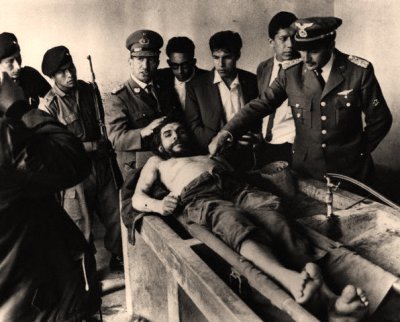
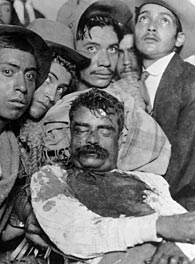
The legends and mythologies surrounding figures being assassinated/executed (Lewis Payne, Zapata, Che Guevara, Jesse James)


Dorothea Lange

Monday, February 16, 2009

Linkeroever Project- Antwerp

Linkeroever

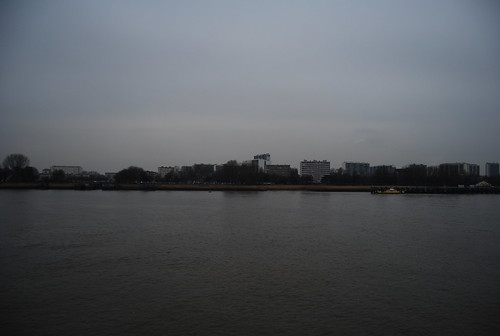
For one of the projects that I have been assigned here in Antwerp, each student has to respond to a specific district, place or building in the Linkeroever region of Antwerp. This place, which literally translates to 'Left Bank', lies across the river from Antwerp's city centre. There is one pedestrian tunnel connecting the two, and a seperate traffic tunnel.

As I was new to the area and wasn't aware of the cultural and historical significance of the area, I asked some other students to describe it to me; most responded with negative, even stereotypical observations of the place. It's dull. Eery even. Like a ghost town. Initially I got the impression it was an industrial district, but it turns out there are residential towers and neighborhoods spread throughout. The relationship between the two halves is comparable, although not equal, to the relationship between North and South Dublin. Inhabitants of either side undoubtedly have allegorical convictions against the other.

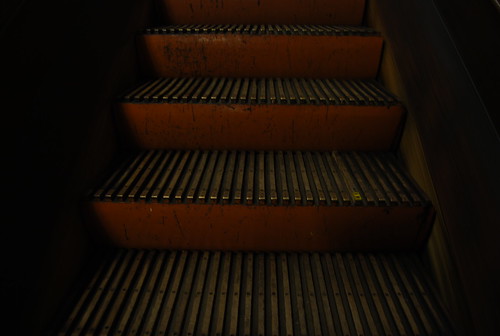
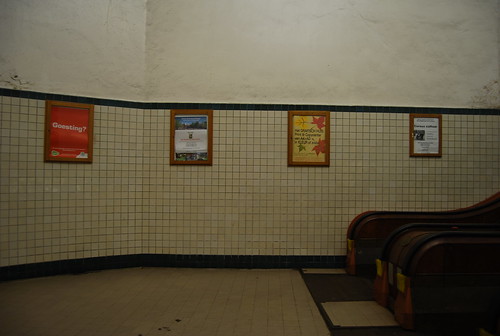
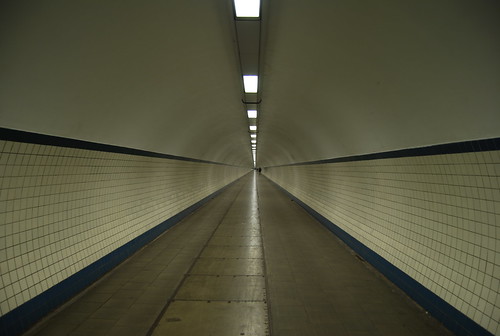
With this relationship in mind, and the ghostlike stories told to me by my classmates, I went on my first trip to 'the other side'. However, I did not get much further than the pedestrian tunnel; lead down by old fashioned wooden escalators, you descend into the tunnel which is over half a kilometer long and a few meters below waterlevel. The entrance buildings on either side are identical copies of one another, yet are surrounded by completely different settings. The tunnel itself is tiled blue and white, and seems unendless and awkwardly chilly when you're walking through.

I decided to base my project within this crossing between left and right, between 'eery' and 'normal'. And because of the tension between the two sides (and also because I kept getting linked to a horrorfilm called Linkeroever when I was researching) I decided to make my piece a work of suspense in the vein of Hitchcock. The tunnel is perfectly suited to Hitchcockian psychological allusions; the fact that it is submerged under water, and connects two sides that don't connect in character, could be quite a good metaphor for the divisions of the human mind (id, ego, superego).

A quote from Vertigo that I find quite relevant and inspiring for this piece:

It is as though I were walking down a long corridor that once was mirrored. And Fragments of that mirror still hang there. And when I come to the end of the corridor, there's nothing but darkness. And I know that when I walk into the darkness, that I'll die. I've never come to the end. I've always come back before then, except once.'


I took a series of polaroids last week, documenting a trip through the tunnel. (you can find them here) With these pictures, I wanted to point out parallels between the two halves of the tunnel, making the relationship between Linker and Rechteroever uncanny. I used polaroids to try and manipulate the feel of the image into becoming a storytelling device (however, I dont think I'll be using polaroids for the rest of the project- it was an experiment as to how best convey that Hitchcock feel of suspense and plot)

Alternatively, I want to use a slide projector and a tape recorder, inspired by James Coleman, to make the experience of the piece an embodied narrative.

Another option would be a video piece, documenting the journey through the tunnel, mirroring/reversing halfway through to point out the uncanny parallel between the left and right. An artist I would look at for this would be Willie Doherty and his video installations at the 2007 Venice Biennale (1 and 2)

Here's some shots of the tunnel and a view of Linkeroever


This project is done in collaboration with the city council; it will amount to two exhibitions (one in march and one in june) and a book.


Besides this project, I've also been assigned a portrait project (with emphasis on the relationship between my subject and I; autobiographical portraits I guess) and a photography project exploring the possibility of truth and lies in a photograph. For the latter project I'm thinking of collaborating with a theatre company, documenting sets, stage and theatre make-up. Otherwise I'll look into the use of mirrors in creating 'false' images.

Thursday, November 27, 2008

Robert Emmet


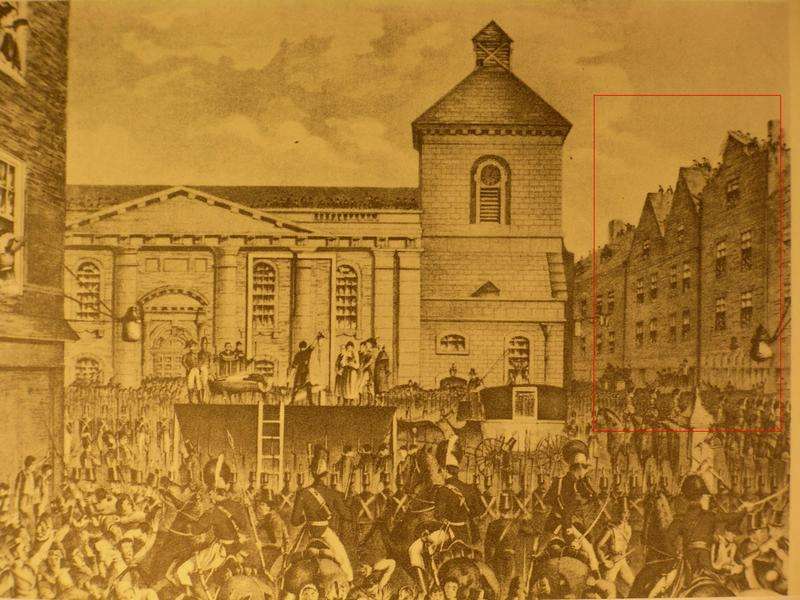
Drawing of a public execution on Thomas Street, Dublin

Drawing of a public execution on Thomas Street, Dublin. This picture is showing the historical gallows outside St. Catherine's church where Robert Emmet was executed in 1798.

Dublin ghost stories


She is Far from the Land


She is far from the land, where her young hero sleeps,
And lovers are round her, sighing;
But coldly she turns from their gaze, and weeps,
For her heart in his grave is lying!

She sings the wild song of her dear native plains,
Every note which he lov'd awaking
Ah! little they think, who delight in her strains,
How the heart of the Minstrel is breaking!

He had lov'd for his love, for his country he died,
They were all that to life had entwin'd him,
Nor soon shall the tears of his country be dried,
Nor long will his love stay behind him.

Oh! make her a grave, where the sun-beams rest,
When they promise a glorious morrow;
They'll shine o'er her sleep, like a smile from the West,
From her own lov'd Island of sorrow!

Thomas Moore


www.robertemmet.org

The Speech from the Dock

What have I to say why sentence of death should not be pronounced on me according to law? I have nothing to say that can alter your predetermination, nor that it will become me to say with any view to the mitigation of that sentence which you are here to pronounce, and I must abide by. But I have that to say which interests me more than life, and which you have labored (as was necessarily your office in the present circumstances of this oppressed country) to destroy. I have much to say why my reputation should be rescued from the load of false accusation and calumny which has been heaped upon it. I do not imagine that, seated where you are, your minds can be so free from impurity as to receive the least impression from what I am going to utter--I have no hopes that I can anchor my character in the breast of a court constituted and trammeled as this is--I only wish, and it is the utmost I expect, that your lordships may suffer it to float down your memories untainted by the foul breath of prejudice, until it finds some more hospitable harbor to shelter it from the storm by which it is at present buffeted.

Was I only to suffer death after being adjudged guilty by your tribunal, I should bow in silence and meet the fate that awaits me without a murmur; but the sentence of law which delivers my body to the executioner will, through the ministry of that law, labor in its own vindication to consign my character to obloquy--for there must be guilt somewhere: whether in the sentence of the court in the catastrophe, posterity must determine. A man in my situation, my lords, has not only to encounter the difficulties of fortune. and the force of power over minds which it has corrupted or subjugated. but the difficulties of established prejudice: the man dies, but his memory lives. That mine may not perish, that it may live in the respect of my countrymen, I seize upon this opportunity to vindicate myself from some of the charges alleged against me. When my spirit shall be wafted to a more friendly port; when my shade shall have joined the bands of those martyred heroes who have shed their blood on the scaffold and in the field, in defense of their country and of virtue. this is my hope: I wish that my memory and name may animate those who survive me, while I look down with complacency on the destruction of that perfidious government which upholds its domination by blasphemy of the Most High-which displays its power over man as over the beasts of the forest-which sets man upon his brother, and lifts his hand in the name of God against the throat of his fellow who believes or doubts a little more or a little less than the government standard--a government which is steeled to barbarity by the cries of the orphans and the tears of the widows which it has made...

My lords, you are impatient for the sacrifice-the blood which you seek is not congealed by the artificial terrors which surround your victim; it circulates warmly and unruffled, through the channels which God created for noble purposes. but which you are bent to destroy. for purposes so grievous. that they cry to heaven. Be yet patient! I have but a few words more to say. I am going to my cold and silent grave: my lamp of life is nearly e4inguished: my race is run: the grave opens to receive me, and I sink into its bosom! I have but one request to ask at my departure from this world--it is the charity of its silence! Let no man write my epitaph: for as no man who knows my motives dare now vindicate them. let not prejudice or ignorance asperse them. Let them and me repose in obscurity and peace, and my tomb remain uninscribed, until other times, and other men, can do justice to my character; when my country takes her place among the nations of the earth, then, and not till then, let my epitaph be written. I have done.

Research for Liberties Public Art: Animating the Space Project

http://www.archiseek.com/

thread on the architecture of Thomas St.

A walking tour of the liberties area

Maps, Files and Ephemera

information about medieval dublin

article about Frawley's demolition

Planning Documents for the demolition of 32-36 Thomas Street, and 10 Hanbury Lane, D8

article on plans for 'no-star' hotel next to vicar st.


http://www.archiseek.com/content/showthread.php?t=6318&page=8

Friday, October 3, 2008

Books I am Reading and Want to Read

Gary Shapiro: Archaeologies of Vision: Foucault and Nietzsche on Seeing and Saying

Katy McLeod nad Lin Holdridge (eds.): Thinking through Art:reflections on art as research

Oswald Hanfling: Ayer

Thomas More: Utopia

Lewis Hyde: The Gift