http://www.ripremix.com/
Showing posts with label video. Show all posts
Showing posts with label video. Show all posts
Wednesday, July 22, 2009

Monday, May 4, 2009
Saturday, April 25, 2009
Courtisane Festival in Gent- A Simple Truth Exhibition
Yesterday I went to the exhibition 'A Simple Truth' in Gent, which is shown as part of the Courtisane Festival. The central theme this year is 'memory'; as I'm planning to write my thesis on memory and language, I found that the exhibition - and the rest of the festival program - were extremely relevant to my research. Phil Collins' piece, for example, specifically deals with the connection between linguistics and cultural memory. The pieces on show in the exhibition were poignant statements about collective and cultural memory, asking questions about the role of media (both art and mainstream) in the shaping of these concepts.
Truth and doubt are inseperable. There's no such thing as an absolute truth, it can't be exactly described, we would need too much words. Sometimes you have to look for details. There you'll find motives that colour and guide, which you'll have to filter and interpret. You've got to build truth, with doubt. A simple Truth looks at the way small gestures and little words define personal recollections and collective memory, how they hide or reveal details.
Telethon- Kevin Jerome Everson, US, 2009

On Memorial Day in 1973, Sammy Davis Jr. hosted a national telethon to raise funds for the Highway Safety Foundation. It wound up losing nearly three-quarters of a million dollars, thanks in no small part to Sammy Davis Jnr’s insistence on having the telethon relayed to over fifty television stations in order to ensure good exposure for himself. Even more curious was the rumoured involvement of the favoured foundation in the production of pornographic films, with filming taking place on a.o. the Highway Safety Foundation bus. But Everson’s Telethon is really about two talented acts waiting to perform in this ill-fated telethon...
I am not sure what to think of this piece; the introductory information provided in the exhibition (and catalog) reads more like an analogy rather than a critical explanation. What I did get from this piece was the questioning of media portrayal of real events. Obviously, Sammy Davis Jr. was the headliner in this telethon, and was the main focus of media attention in relation to the public profile of this event. However, in this piece, two unknown performers are highlighted (I presume they are fictitious characters played by actors). Interjecting actual footage of the telethon with fictional narratives of unknown participants raises the issue of what is shown in the media, and what remains hidden.
Ten Men- Mark Raidpere, EE, 2003

Alienation and isolation are recurrent themes in Raidpere’s work. Ten Men shows a series of ten violent male offenders in Tartu prison. They are all serving long-term sentences, shut away from social life, deprived of any normal professional and individual dignity, imprisoned in a place that leaves them no other possibility of identifying with the society around them. Raidpere asked them how they wanted to be perceived in regard to their personality. The work is unscripted and set against a background of crackling music, reminiscent of a musical box. The prisoners flex their muscles and flaunt their tattoos for the camera, but also smile in embarrassment and look away in hope of solidarity. It is a divergent display of masculinity that leaves us wondering which of the prisoners are brutal criminals and which are simply victims of society.
I found this piece perhaps the most controversial- the portrayal of the men is obviously intentionally ambiguous; we don't know what crimes they committed, only that they were of a violent nature, and that the men continued to be aggressive when imprisoned. The music that plays over the images is the main operative in altering our perception of the men (you can hear it at the start of the video below). I found this quite a disturbing technique- I was watching the videos with the knowledge that these men were dangerous criminals, yet the music attempts to disarm your preconception of them as 'bad'. Freeze frames and slow motion are also employed to single out facial expressions and body language that further confuse our interpretation of these portraits. The piece was effective in that I found myself simultaneously empathetic and fearful of the men.
Visitor- Ivan Grubanov, RS, 2003

When the Serbian artist Ivan Grubanov began his residency at the Rijksacademie in Amsterdam in 2002, this coincided with the start of the International Criminal Tribunal for the Former Yugoslavia (ICTY) in The Hague against his former president, Slobodan Milosevic. For two years he visited the Tribunal regularly. Confronted with the man and the events which had shaped his life, he looked for a way to capture the intensity of this experience. He started to make drawings, in an attempt to relate to this chapter in history. Again and again, from the same angle Grubanov draws the man who dominated his life, although he had never met him before. Gradually he developed a sensitivity for Milosovic’s slightest gestures. The intimacy of the drawings is insidious...
I really liked the presentation of this piece- a projector was beaming out the illustrations onto a wall. A very simple, clean exhibit, that relied on the weight of the drawings for meaning. The drawings themselves were minimal line drawings, effective in portraying body language and recognizable characters (Milosevic being the center piece, alongside the judicial participants). Most drawings had a line of text scribbled, almost illegibly, marking out a significant moment in court relating to the crimes Milosevic was being tried for. The illustrations show the retelling of war atrocities and crimes that affected a whole population, played out in the clinical setting of a systematic courtroom. The seeming visual disconnect between Milosevic on trial and the stories of war crimes is effective- we know of the artist's personal involvement in these events, and as a consequence the drawings become a therapeutic, if not a somewhat obsessive attempt, to process memories that are so far removed institutionally from the court proceedings.
Zasto Ne Govorim Srpski (Na Srpskom)- Phil Collins, UK, 2008
_Film_still_2.jpg)
“A few years ago I was in Prishtina with a friend from Croatia, miming at the guy behind the counter for beer. In the end my friend came out and asked ‘Imate li pivo, molim?’ There was a very complex reaction from the elderly shop assistant. He said, in Serbian, that he hadn’t spoken Serbian for such a long time. My friend from Croatia corrected him – she was from Croatia, and was actually speaking Croatian. And if his face fell a little, I don’t know. Someone else came in the shop, we made our purchase and left.”
Phil Collins often works in socially and politically contested regions, employing elements of popular culture, low budget television and reportage style documentary, to articulate a critical fascination with the ways in which contemporary media structure lived experience. Shot in black and white 16 mm film, the film weaves unbearably intimate close-ups into a fragmented and effective panorama of Kosovo’s recent past. Contributors include politicians, intellectuals and public figures as well as ‘ordinary’ people recounting in Serbian the reasons why they no longer speak the Serbian language. They range from attempts to historicize experience to deeply personal accounts of trauma and loss.
Truth and doubt are inseperable. There's no such thing as an absolute truth, it can't be exactly described, we would need too much words. Sometimes you have to look for details. There you'll find motives that colour and guide, which you'll have to filter and interpret. You've got to build truth, with doubt. A simple Truth looks at the way small gestures and little words define personal recollections and collective memory, how they hide or reveal details.
Telethon- Kevin Jerome Everson, US, 2009

On Memorial Day in 1973, Sammy Davis Jr. hosted a national telethon to raise funds for the Highway Safety Foundation. It wound up losing nearly three-quarters of a million dollars, thanks in no small part to Sammy Davis Jnr’s insistence on having the telethon relayed to over fifty television stations in order to ensure good exposure for himself. Even more curious was the rumoured involvement of the favoured foundation in the production of pornographic films, with filming taking place on a.o. the Highway Safety Foundation bus. But Everson’s Telethon is really about two talented acts waiting to perform in this ill-fated telethon...
I am not sure what to think of this piece; the introductory information provided in the exhibition (and catalog) reads more like an analogy rather than a critical explanation. What I did get from this piece was the questioning of media portrayal of real events. Obviously, Sammy Davis Jr. was the headliner in this telethon, and was the main focus of media attention in relation to the public profile of this event. However, in this piece, two unknown performers are highlighted (I presume they are fictitious characters played by actors). Interjecting actual footage of the telethon with fictional narratives of unknown participants raises the issue of what is shown in the media, and what remains hidden.
Ten Men- Mark Raidpere, EE, 2003

Alienation and isolation are recurrent themes in Raidpere’s work. Ten Men shows a series of ten violent male offenders in Tartu prison. They are all serving long-term sentences, shut away from social life, deprived of any normal professional and individual dignity, imprisoned in a place that leaves them no other possibility of identifying with the society around them. Raidpere asked them how they wanted to be perceived in regard to their personality. The work is unscripted and set against a background of crackling music, reminiscent of a musical box. The prisoners flex their muscles and flaunt their tattoos for the camera, but also smile in embarrassment and look away in hope of solidarity. It is a divergent display of masculinity that leaves us wondering which of the prisoners are brutal criminals and which are simply victims of society.
I found this piece perhaps the most controversial- the portrayal of the men is obviously intentionally ambiguous; we don't know what crimes they committed, only that they were of a violent nature, and that the men continued to be aggressive when imprisoned. The music that plays over the images is the main operative in altering our perception of the men (you can hear it at the start of the video below). I found this quite a disturbing technique- I was watching the videos with the knowledge that these men were dangerous criminals, yet the music attempts to disarm your preconception of them as 'bad'. Freeze frames and slow motion are also employed to single out facial expressions and body language that further confuse our interpretation of these portraits. The piece was effective in that I found myself simultaneously empathetic and fearful of the men.
Visitor- Ivan Grubanov, RS, 2003

When the Serbian artist Ivan Grubanov began his residency at the Rijksacademie in Amsterdam in 2002, this coincided with the start of the International Criminal Tribunal for the Former Yugoslavia (ICTY) in The Hague against his former president, Slobodan Milosevic. For two years he visited the Tribunal regularly. Confronted with the man and the events which had shaped his life, he looked for a way to capture the intensity of this experience. He started to make drawings, in an attempt to relate to this chapter in history. Again and again, from the same angle Grubanov draws the man who dominated his life, although he had never met him before. Gradually he developed a sensitivity for Milosovic’s slightest gestures. The intimacy of the drawings is insidious...
I really liked the presentation of this piece- a projector was beaming out the illustrations onto a wall. A very simple, clean exhibit, that relied on the weight of the drawings for meaning. The drawings themselves were minimal line drawings, effective in portraying body language and recognizable characters (Milosevic being the center piece, alongside the judicial participants). Most drawings had a line of text scribbled, almost illegibly, marking out a significant moment in court relating to the crimes Milosevic was being tried for. The illustrations show the retelling of war atrocities and crimes that affected a whole population, played out in the clinical setting of a systematic courtroom. The seeming visual disconnect between Milosevic on trial and the stories of war crimes is effective- we know of the artist's personal involvement in these events, and as a consequence the drawings become a therapeutic, if not a somewhat obsessive attempt, to process memories that are so far removed institutionally from the court proceedings.
Zasto Ne Govorim Srpski (Na Srpskom)- Phil Collins, UK, 2008
_Film_still_2.jpg)
“A few years ago I was in Prishtina with a friend from Croatia, miming at the guy behind the counter for beer. In the end my friend came out and asked ‘Imate li pivo, molim?’ There was a very complex reaction from the elderly shop assistant. He said, in Serbian, that he hadn’t spoken Serbian for such a long time. My friend from Croatia corrected him – she was from Croatia, and was actually speaking Croatian. And if his face fell a little, I don’t know. Someone else came in the shop, we made our purchase and left.”
Phil Collins often works in socially and politically contested regions, employing elements of popular culture, low budget television and reportage style documentary, to articulate a critical fascination with the ways in which contemporary media structure lived experience. Shot in black and white 16 mm film, the film weaves unbearably intimate close-ups into a fragmented and effective panorama of Kosovo’s recent past. Contributors include politicians, intellectuals and public figures as well as ‘ordinary’ people recounting in Serbian the reasons why they no longer speak the Serbian language. They range from attempts to historicize experience to deeply personal accounts of trauma and loss.
Tuesday, March 31, 2009
Monday, March 23, 2009
Monday, December 15, 2008
Friday, December 5, 2008


Wednesday, October 29, 2008
Studio Reactions
Bryan reacting to the camera in studio
Dave reacting to the camera in studio
Elizabeth reacting to her image on the camera screen, 'looking' at the Guernica in studio
Grace reacting to her image on the camera screen
Siobhan reacting to the camera in studio
Collective screening of the reaction videos (random idea- probably not going to use in relation to project)
Dave reacting to the camera in studio
Elizabeth reacting to her image on the camera screen, 'looking' at the Guernica in studio
Grace reacting to her image on the camera screen
Siobhan reacting to the camera in studio
Collective screening of the reaction videos (random idea- probably not going to use in relation to project)
Tuesday, October 28, 2008
Reactions edited
These are reactions edited to focus on expressions. The videos are reactions to the the reactions recorded of dave and grace last week. These are just experiments, I will stick with the static shot for the actual project videos.
Anaelle Reacting/Blinking to Dave's Reaction Video
Laura Reacting to Grace's Reaction Video/Looking up at Simon
Michelle Reacting to Grace's Reaction Video
Anaelle Reacting/Blinking to Dave's Reaction Video
Laura Reacting to Grace's Reaction Video/Looking up at Simon
Michelle Reacting to Grace's Reaction Video
Wednesday, October 22, 2008
Saturday, September 27, 2008
Visit to Museum of Photography in The Hague, 27/09/08
We went to the museum mainly to go see the Erwin Olaf exhibition, a cumulative collection of 4 of his photographic series, Rain, Hope, Grief and Fall. There were 2 video pieces as well, one accompanying Rain and one as an individual piece satirically commentating on fashion and plastic surgery.
The first series on show, Rain, was initially meant to depict American culture, read 1950's ideals, in all its glory. Instead, in the process of taking the photographs, he experienced a disconnection between the idea and the subject. Thus he decided to use rain as a visual metaphor for this break between the ideal and the people it was supposed to envelop.


The second series, Hope, basically takes off where Rain ended. It offers similar scenes, yet instead of the photographs demonstrating a static image, they lend themselves to storytelling and 'reaching beyond' the photo. Their meant to be seen as a window into a story, and it is left up to the viewer to carry the plot forth. Also, unlike the previous series, this one includes individual portraits, allowing to develop characters further.


My favorite series of the lot is Grief, capturing moments before the explosion of emotion. It also examines how one's identity, how you dress, body language, etc, is relational. The pictures are all named after famous American figures, such as Troy and Grace.


The final series, Fall, just like Rain, stumbled upon it's intent by accident. Olaf caught one of his models during a photoshoot blinking, creating an imperfect image in one which was so tweaked otherwise that it became an interesting relationship. By catching the moment of blinking, the models were left expressionless, negating any hint of emotion or awareness of surroundings. Interesting concept, although I thought it was slightly over-stylized.


Here's his website: http://www.erwinolaf.com/
We also saw an exhibition by Thorsten Brinkmann, a German artist working with found objects, using them to comment on the relationship between man and object, and the disposability of present day products. True Romans was a collection of found objects coupled together, for example a glass with a rose-shaped candle turned upside down into the glass. There was also a photo series called Variable Sturktur 1-8, which cataloged a few possible ways of assembling a set of objects including a cooker. There was also an isolated room which you had to enter through a wardrobe; it contained a number of (self?) portraits in which the human subject was 'wearing' things such as lampshades. There was also a video piece entitled "gut Ding will es so' which saw the artist interacting with things in a way which didn't cohere with their intended function (for example, he crawled through the arms of an office chair, subsequently shuffling around on all fours with a chair around his waist. Also, he smacked four pieces of polystyrene foam against his head whilst wearing a motorcycle helmet).


The first series on show, Rain, was initially meant to depict American culture, read 1950's ideals, in all its glory. Instead, in the process of taking the photographs, he experienced a disconnection between the idea and the subject. Thus he decided to use rain as a visual metaphor for this break between the ideal and the people it was supposed to envelop.

The second series, Hope, basically takes off where Rain ended. It offers similar scenes, yet instead of the photographs demonstrating a static image, they lend themselves to storytelling and 'reaching beyond' the photo. Their meant to be seen as a window into a story, and it is left up to the viewer to carry the plot forth. Also, unlike the previous series, this one includes individual portraits, allowing to develop characters further.


My favorite series of the lot is Grief, capturing moments before the explosion of emotion. It also examines how one's identity, how you dress, body language, etc, is relational. The pictures are all named after famous American figures, such as Troy and Grace.


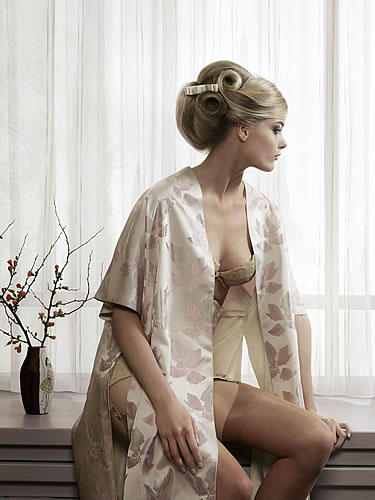

The final series, Fall, just like Rain, stumbled upon it's intent by accident. Olaf caught one of his models during a photoshoot blinking, creating an imperfect image in one which was so tweaked otherwise that it became an interesting relationship. By catching the moment of blinking, the models were left expressionless, negating any hint of emotion or awareness of surroundings. Interesting concept, although I thought it was slightly over-stylized.


Here's his website: http://www.erwinolaf.com/
We also saw an exhibition by Thorsten Brinkmann, a German artist working with found objects, using them to comment on the relationship between man and object, and the disposability of present day products. True Romans was a collection of found objects coupled together, for example a glass with a rose-shaped candle turned upside down into the glass. There was also a photo series called Variable Sturktur 1-8, which cataloged a few possible ways of assembling a set of objects including a cooker. There was also an isolated room which you had to enter through a wardrobe; it contained a number of (self?) portraits in which the human subject was 'wearing' things such as lampshades. There was also a video piece entitled "gut Ding will es so' which saw the artist interacting with things in a way which didn't cohere with their intended function (for example, he crawled through the arms of an office chair, subsequently shuffling around on all fours with a chair around his waist. Also, he smacked four pieces of polystyrene foam against his head whilst wearing a motorcycle helmet).


Friday, June 6, 2008
Eija-Liisa Ahtila
from the Tate website:
Love, sexuality, jealousy, anger, vulnerability, and reconciliation - the powerful emotions underlying human relationships are explored in the works of Finnish artist Eija-Liisa Ahtila.
Ahtila has described her work as 'human dramas', fictional narratives that emerge from lengthy periods of research as well as from her own observations and experiences. The process of emotional reconciliation is a recurrent motif: her characters move between past and present without relying on a conventional cinematic 'flashback'. In recent work, the border between 'self' and 'other' is investigated as the viewer is invited to peer inside the minds of individuals caught in moments of psychological fragility.
Above all, Ahtila is concerned with the language of film-making. There are three elements that she views as central to her work: the way images are constructed, the way narrative unfolds, and the physical space in which the work is encountered. She is interested in how film and video are absorbed into our everyday worlds, and many of her works adopt the techniques of contemporary media, from music videos, commercials, cinema trailers to documentary film.
The treatment of colour in the films is particularly painterly, while her approach to the display of the works is deliberate and considered. Some of the films are shown on multiple screens, or within complex installations that require the viewer to navigate their way through the space. Others are as likely to be encountered in a cinema or on television as in a gallery setting.
Eija-Liisa Ahtila was born in Hameenlinna, Finland in 1959, and lives and works in Helsinki.
Tuesday, May 6, 2008
The Epic Apartment Movie
Finally, it's finished. Well, I might do some more tweaking here and there, but in general I'm happy with it.
Thursday, May 1, 2008
Tuesday, April 29, 2008
Liquid Video Experiment no. 2
for some reason, one of the videos isn't showing up in the previous post. So I'm now posting it on its own, hopefully it'll show up.
Monday, April 14, 2008
Berlin Biennial 2008 (part 1)
I'll put up my own pics of the Biennial later on in part 2. for now I'll just put up some links to video pieces from the KW gallery.
David Maljkovic: Lost Memories from These Days, 2006-8http://www.blogger.com/img/gl.link.gif
Kim Sung Hwan: Summer Days in Keijo, 1937/2007
David Maljkovic: Lost Memories from These Days, 2006-8http://www.blogger.com/img/gl.link.gif
Kim Sung Hwan: Summer Days in Keijo, 1937/2007
Tuesday, April 1, 2008
Cinematography that inspires me
Thursday, March 27, 2008
Subscribe to:
Posts (Atom)

 Posts
Posts

